


Vai al contenuto

Sukhoi Su-57 - discussione ufficiale

Discussione ufficiale di cosi tanto atteso PAK FA! Finalmente il mistero è stato svelato il 29/01/2010


Cronologia del evento:


Fulcro sulla pista, ancora un pò...... (01:45h italia)


Cockpit chiuso.... (02:07 Italia)


Rulaggio.... (02:14 italia)


Decollo.... (02:19 italia) notworthy1.gif


Confermo il primo volo del T-50, in una giornata senza (che fortuna!) una nuvola, speriamo che le foto siano venute bene.
:adorazione:


Atteraggio.... (03.09 italia)


I primi foto e il video:


IMG_9631.jpg


IMG_9630.jpg


IMG_9629.jpg


Moscow, January 29, 2010 – Today Komsomolsk-on-Amur witnessed the debut flight of a prototype of advanced fighter of the 5th generation. The aircraft piloted by Sukhoi test-pilot Sergey Bogdan spent 47 minutes in the air and successfully landed on the factory runway.


The flight went successfully meeting all task assigned. "In the course of the flight we've conducted initial evaluation of the aircraft controllability, engine performance and primary systems operation, the aircraft had retracted and extracted the landing gear. The aircraft performed excellently at all flight-test points scheduled for today. It is easy and comfortable to pilot", - said Sergey Bogdan.


Compared to the previous generation fighters PAK FA possesses a number of unique features combining the functionality of both attack aircraft and fighter plane.


The 5th generation fighter is equipped with brand-new avionics suite integrating "electronic pilot" functionality, as well as advanced phased-array antenna radar. This significantly decreases pilot load and allows him to focus upon completion of tactical missions. New aircraft on-board equipment allows real-time data exchange not only with ground based control systems, but also within the flight group.


Composites application and innovative technologies, aerodynamics of the aircraft, measures applied to decrease the engine signature provide for the unprecedented small radar cross section in radar, optical and infrared range. This significantly improves combat effectiveness against air and ground targets at any time of the day in both visible and instrument meteorological conditions.


"Today we've embarked on an extensive flight test programme of the 5th generation fighter. This is a great success of both Russian science and design school. This achievement rests upon a cooperation team comprised of more than a hundred of our suppliers and strategic partners. PAK FA programme advances Russian aeronautics together with allied industries to an entirely new technological level. These aircraft, together with upgraded 4th generation fighters will define Russian Air Force potential for the next decades. Sukhoi plans to further elaborate on the PAK FA programme which will involve our Indian partners. I am strongly convinced that our joint project will excel its Western rivals in cost-effectiveness and will not only allow strengthening the defense power of Russian and Indian Air Forces, but also gain a significant share of the world market", - said Mikhail Pogosyan, Sukhoi Company Director General commenting on the launch of the flight test programme.

  • Risposte 1,7k
  • Visite 522,2k
  • Aperto da
  • Ultima risposta

Utenti più attivi

Messaggi più popolari

  • E' in pratica un'originalissimo incrocio tra un canard, un ipersostentatore di bordo d'attacco e un labbro mobile della presa d'aria. Non occlude la presa d'aria, ma anzi ne dirige correttamente il f

  • Butto giù un paio di considerazioni. Il Pak-FA non sarà un game changer, se non per l’industria russa, che si prepone con questo velivolo di limitare il gap tecnologico con gli USA, accentuatosi dal

  • Beh si, alla fine della fiera si. Premettiamo: ben poco di quello che vola oggi non è stato in qualche modo provato e soppesato prima negli USA. Ciò non significa che uno degli aspetti in cui la scu
Immagini pubblicate

Risposte in evidenza

Il giovanotto inizia a far vedere quello che sa fare...


http://www.youtube.com/watch?v=QKj-gX7Q2X8


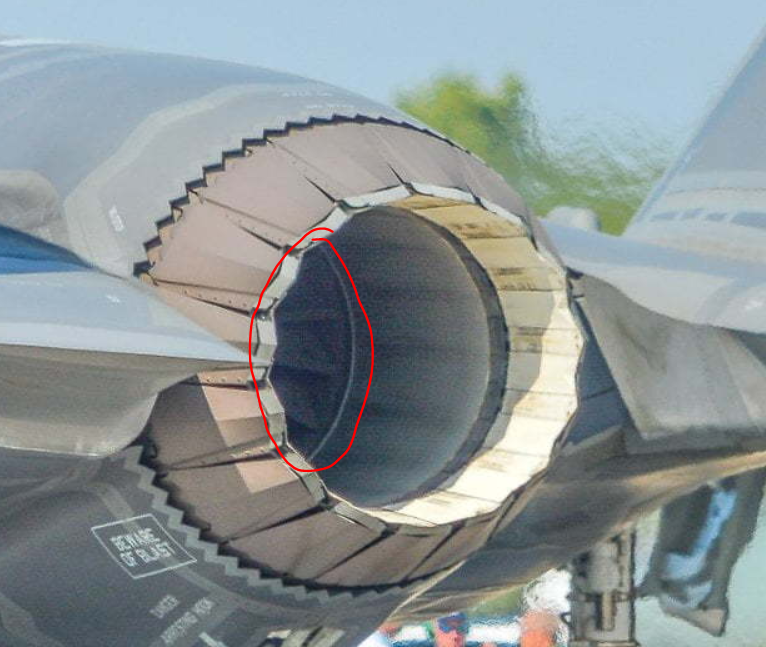
Sono convinto che prima o poi troveranno una soluzione più adatta ad uno stealth anche per gli scarichi!

Una nuova combinazione di volo consentirebbe ai piloti del T-50 di volare a quote intorno ai 23000 metri ....


New G-suit gives PAK-FA higher operational ceiling than the Raptor?


Russian Sukhoi T-50 PAK-FA pilots will be equipped with a new g-suit that will allow them to eject from the aircraft at altitudes of 75,000ft (23,000m).

If the PAK-FA is able to fly at those altitudes operationally, that would mean that it has a significantly higher operational ceiling than the Lockheed Martin F-22 Raptor


Fonte .... http://www.flightglobal.com/blogs/the-dewline/2013/07/new-g-suit-gives-pak-fa-higher.html

Mi permetto di dubitare seriamente di questi numeri. Basta guardare i piloti dell' U2

http://www.afcent.af.mil/news/story.asp?id=123310891


The U-2 supports the 99th ERS's mission by providing imagery, surveillance and reconnaissance, said Aldeguer, a native of Anchorage, Alaska. To do this, the aircraft routinely flies at altitudes in excess of 70,000 feet, which requires the pilot to wear a full-pressure suit similar to those worn by astronauts.

"From what I'm told, it's an identical suit to what astronauts wear when they are going up or coming down, because it fulfills the same purpose," said Peter. "It gives them a safety net to protect them in case something goes wrong."

Typically, the U-2 cabin is pressurized to 29,000 feet, Peter said. Though this is roughly equivalent to the top of Mount Everest, a safe pressurization altitude.

The pilots are also put on 100-percent oxygen approximately an hour before launch, Aldeguer said.

"The purpose in having the pilot on 100-percent oxygen is to decrease the amount of nitrogen in his body so we can reduce the effects of DCS (decompression sickness)," Aldeguer said. "In decompression sickness, nitrogen bubbles begin to form in the blood. Those bubbles can travel to your joints or even worse your central nervous system, i.e. the brain or the spinal cord."

Should something cause the cabin to depressurize, at 70,000 feet the nitrogen would boil the pilot's blood, causing death, Peter said.

"The suit is a backup to prevent that from happening," he said. "If the aircraft depressurizes then the suit will inflate and keep us at a safe pressurization altitude."


Ora, come uno "scafandro" si concilia con le operazioni di un fighter e' difficile da immaginare!

Non sottovaluterei il fatto che l'impianto è stato realizzato dall'azienda Zvezda .... universalmente nota per la produzione, fra le altre cose, di sedili eiettabili che hanno platealmente dimostrato la loro efficienza in più di una occasione salvando la vita di piloti sovietico-russi coinvolti in paurosi incidenti .... e questo davanti a migliaia di persone che affollavano manifestazioni aeree in Occidente ....


http://www.youtube.com/watch?v=5MQk1yvsoKY


http://www.youtube.com/watch?v=Yh-kuztsE1s


RT .... http://rt.com/news/pak-fa-unlimited-oxygen-supply-198/


Izvestiya .... http://izvestia.ru/news/553809

Per quanto riguarda il video postato da Super87: lo vedo lento nel cambiare direzione istantaneamente, sara' per la massa del veivolo o molto piu' probabilmente perche' non lo hanno strapazzato. Per quanto riguarda i 23 mila feet dovrebbe essere un dato veritiero. L'altro giorno ho postato la notizia di certificazione del seggiolino eiettabile a quella quota.

Per quanto riguarda il video postato da Super87: lo vedo lento nel cambiare direzione istantaneamente, sara' per la massa del veivolo o molto piu' probabilmente perche' non lo hanno strapazzato.

Per quanto riguarda i 23 mila feet dovrebbe essere un dato veritiero.

L'altro giorno ho postato la notizia di certificazione del seggiolino eiettabile a quella quota.


Il video in questione risale a circa due anni fa (mese di Agosto 2011 in occasione del MAKS) .... è pertanto possibile che nel frattempo, col progredire dei voli di collaudo, l'aereo sia in grado di fare di più .... si tratterà di pazientare sino alla fine del mese prossimo per verificare ....


http://www.aviasalon.com/en/


PS .... la quota di cui si parla è in realtà 23000 metri .... ;)

Non sottovaluterei il fatto che l'impianto è stato realizzato dall'azienda Zvezda .... universalmente nota per la produzione, fra le altre cose, di sedili eiettabili che hanno platealmente dimostrato la loro efficienza in più di una occasione salvando la vita di piloti sovietico-russi coinvolti in paurosi incidenti .... e questo davanti a migliaia di persone che affollavano manifestazioni aeree in Occidente ....


http://www.youtube.com/watch?v=5MQk1yvsoKY


http://www.youtube.com/watch?v=Yh-kuztsE1s


RT .... http://rt.com/news/pak-fa-unlimited-oxygen-supply-198/


Izvestiya .... http://izvestia.ru/news/553809


Non parlo dei sedili, ma della tuta.

Ora, come uno "scafandro" si concilia con le operazioni di un fighter e' difficile da immaginare!


Hai mai visto come vanno in volo i piloti dei mig-31? http://www.youtube.com/watch?v=iAsSKA6Jgck


Lo vogliamo vedere fare il cobra!!! :punk:

Non parlo dei sedili, ma della tuta.


Mentre io parlo di un'azienda all'avanguardia .... nonostante sia russa ....


Hai mai visto come vanno in volo i piloti dei mig-31? http://www.youtube.com/watch?v=iAsSKA6Jgck


Lo vogliamo vedere fare il cobra!!! :punk:


Infatti nel filmato i piloti non indossano un equipaggiamento per andare a quell'altezza. Teniamo presente che un aereo da superiorita aerea che dovesse affrontare un combattimento sarebbe chiamato a manovrare in modo molto aggressivo.


Il casco indossato per andare oltre i 55-60mila piedi e' decisamente piu pesante rispetto a quello standard.


Effettuare delle accellerazioni a 5 g significa che il collo dovrebbe reggere un peso superiore ai 50 kg.


http://sciencebasedlife.wordpress.com/2011/03/22/exploring-the-g-force-why-woodpeckers-dont-get-concussions/


Tempo fa l' F22A effettuo delle operazioni a 18mila metri il cui unico scopo era il lancio di bombe JDAM.

Il pilota aveva una tuta per volare a quelle altezze.


Suppongo che i russi vogliano ipotizzare missioni di questo tipo, perche nel caso impiegassero il loro mezzo per il ruolo in cui e' stato concepito i 23mila metri non c'entrano proprio nulla.


Mentre io parlo di un'azienda all'avanguardia .... nonostante sia russa ....


L'ipotesi che un pilota possa lanciarsi a 23mila metri di altezza senza una tuta speciale che lo protegga e' semplicemente fantascienza!


Quindi non si puo progettare tale seggiolino senza ipotizzare l'uso di una tuta speciale, che per pesi e limitazioni e' poco compatibile con le operazioni dei piloti da caccia che devono manovrare ad alto numero di g. Non a caso queste attrezzature vengono impiegate da ricognitori strategici o navicelle che vanno nello spazio.


Per capire di cosa stiamo parlando ecco il "sky diver" Felix Baumgarter che effettua il lancio da quell'altezza!


http://www.guardian.co.uk/sport/2012/mar/16/skydiver-jumps-earth-record-attempt

Beh... ancora nei vari filmati non si vede un pak fa a quote elevate... tuttavia se viene certificato per essere operativo a certe altezze si ipotizza che dovrebbe essere in grado di lanciare missili che poi andrebbero a colpire grazie alla combinazione di spinta accumulata in precesenza e capacita' di manovra. Sicuramente lanciare da quote elevate costituisce un vantaggio. E sicuramente a certe quote non si puo' ipotizzare dogfight ma solo lanci in bvr. Quindi sopportare determinate forze gravitazionali non e' espressamente richiesto come non e' richiesta una grande capacita' di manovra (MIG 25/31 docet) che comunque nel PAK FA si palesa a quote inferiori... in un ipotetico scontro bvr,considerando le quote operative, avremmo un missile amraam che deve "salire" per raggiungere il bersaglio, cioe' il t-50. Ma sappiamo tutti che per evitare un missile il trucco e' fargli perdere energia.. gia' "salendo" ne perde. E poi dovra' pure manovrare per raggiungere il t-50 che intanto avra' iniziato a virare per evitare. Se queste peculiarita' del T-50 rimanessero tali mi viene in mente la famosa frase: houston, we have had a problem. Ma non perche' si avra' mai uno scontro diretto...ma per ben altre implicazioni...

Il compito di un caccia e' difendere lo spazio aereo nazionale.


Ora, un aereo che decidesse di volare a 23000 metri di altezza, mentre degli jets nemici effettuano delle incursioni volando a 4-5metri non avrebbe ottenuto molto!


Teniamo presente peraltro che l'idea di portarsi a tale quota su scramble o durante un pattugliamento e' impraticabile.

http://www.usni.org/u-2s-still-flying-high


One of the PSPTS technicians asked me if I was ready and led me over to the treadmill. I was to work out for 10 minutes on 100 percent oxygen in a time-honored pre-breathing exercise to outgas nitrogen. Decompression sickness is a very real threat for U-2 pilots, requiring them to pre-breathe for one hour prior to flight. Tucc and I were running alongside each other and would not be able to communicate again until we were strapped into the plane.

...........

Following my brief workout, two technicians began the 30-minute process of getting me into the pressure suit. The La-Z-Boys weren’t there for fun; they were there to allow PSPTS techs to be able to correctly fit and test the pressure suit. They also helped keep the pilot’s core temperature from rising too quickly. It was then that I began to realize how helpless I was in the suit. The technicians did everything for us, including walking with us and carrying our portable oxygen systems. As a rule, I’m not claustrophobic, but as they attached my space helmet, I felt the first twitches of anxiety.


Per gli amanti di Top Gear.......vi da l'idea di cosa stiamo parlando!


http://www.youtube.com/watch?v=1PmYItnlY5M

Partire da una CAP o su scramble per arrivare a 23 mila e' improponibile. Per quanto riguarda gli U2 avevo anche letto che i piloti ci mettono un giorno intero per "digerire" un volo. Partire da terra con adeguata preparazione e' ben diverso. I contesti in cui sarebbe chiamato a farlo sono ovviamente ipotetici e scarsamente pertitenti all'attuale situazione geopolitica. Ma se comunque riesce a farlo e' un bene per i russi. Come diceva mia nonna: impara l'arte (mestiere) e mettila da parte.... poi se serve se ne parla.


Ps: quel maledetto jeremy clarkson ha guidato di tutto e non contento si e' fatto un giretto sull' U-2 e uno sull'F-15... invidia pura!

Modificato da fabio-22raptor

Per gli amanti di Top Gear.......vi da l'idea di cosa stiamo parlando!


http://www.youtube.com/watch?v=1PmYItnlY5M

Aggiungo che James May è stato uno dei pochi uomini a volare con l'U-2

il documentario è James May at the Edge of Space del 2009

http://www.youtube.com/watch?v=DJahZkYAmW8

Chiuso OT

Modificato da matteo16

  • 3 settimane dopo...

Consegna imminente alla VVS ....


Defense Russian Air Force to Get First T-50 Fighter Jet This Year ....


The Russian Air Force will take delivery of its first fifth-generation T-50 fighter jet "in the third quarter of this year" for final state test flights starting in the fourth quarter, the service's commander Lt. Gen. Viktor Bondarev said Tuesday.


Fonte .... http://en.rian.ru/military_news/20130806/182606552/Russian-Air-Force-to-Get-First-T-50-Fighter-Jet-This-Year.html


25fkn10.jpg


  • 3 settimane dopo...

Nuovi dettagli .... alla vigilia di MAKS 2013 ....


Sukhoi T-50 Shows Flight-Control Innovations ....


By Bill Sweetman

Source: Aviation Week & Space Technology

August 19, 2013


A highlight of the MAKS air show, which opens at Zhukovsky Airport near Moscow next week, is likely to be the demonstration of the Sukhoi T-50 PAK FA (Perspektivny Aviatsionny Kompleks Frontovoy Aviatsii—Future Tactical Air System) fighter.

The T-50 appeared at MAKS two years ago, but is now flying with updated control laws that expand its flight envelope. (The program had flown fewer than 100 test sorties between its January 2010 maiden flight and its MAKS debut.) Recent videos show the aircraft performing what appear to be sustained-altitude flat rotation maneuvers and high-angle-of-attack turns similar to those demonstrated at the Paris air show by the Su-35S. Four T-50 prototypes have now flown and a fifth is expected to fly by the end of the year. The first state acceptance trials are due to start in 2014, United Aircraft Corporation President Mikhail Pogosyan said earlier this year, and production should start in 2015.

Russian President Vladimir Putin has said that production aircraft will enter service in 2016. However, since the aircraft has yet to fly with its definitive engine, this most likely indicates that the Russian air force is reverting to Soviet-era practice by equipping an operational test unit with interim-standard aircraft while development of the objective system is completed.

Many details of the fighter's equipment and armament remain classified or unpublished. However, in recent months the Sukhoi design bureau has obtained several patents relating to the T-50, including the rationale behind the stealth fighter's configuration.

One Sukhoi patent opens by outlining a reference design similar to the Lockheed Martin F-22, but notes perceived shortcomings and areas where the Russian designers, starting a decade later after work on the Su-27 and its descendants, tried to do better. The F-22's thrust-vector control (TVC) system cannot provide roll or yaw control because the engines are too close together. The engine installation leaves no place for weapon bays in the same plane as the engines—they have to be installed around and below the inlet ducts. The serpentine inlet ducts add length and weight. Post-stall recovery is problematic if TVC fails, and the fixed fins and rudders are large.

The T-50 is a blended wing-body design, resembling the Su-27 in one key respect: the core of the structure is the “centroplane,” a long-chord, deep-section inner wing to which the rest of the airframe components—the forward fuselage and widely separated engine nacelles, wings and tail surfaces—are attached. Compared to the Su-27, however, the centroplane is deeper between the engines, to accommodate weapon bays.

The flight control system has 14 effectors—12 moving flight control surfaces and the engine nozzles. The wing leading-edge flaps are used symmetrically to maintain lift at high angles of attack and adjust the wing profile to the Mach number. The ailerons are used only at low speed and takeoff and landing, when the flaperons are used to increase lift. At higher speeds, roll control comes from the flaperons and horizontal tails.

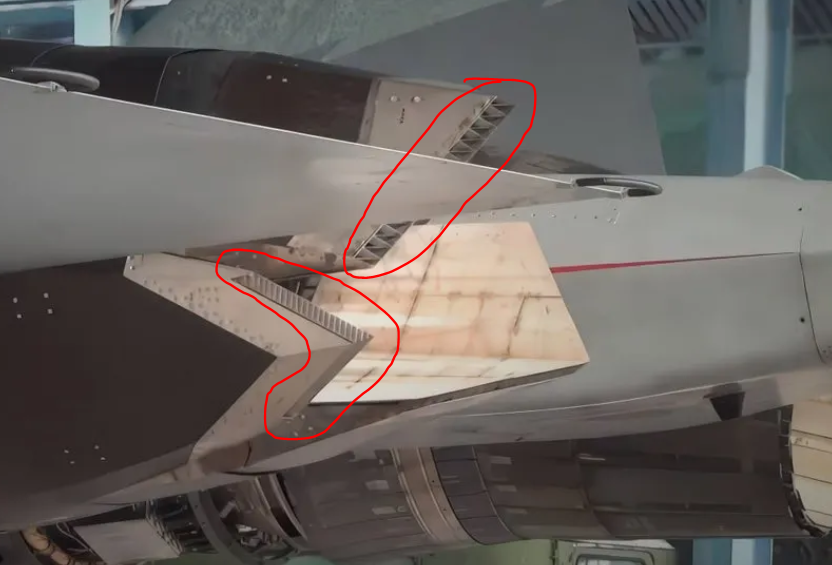
The all-moving vertical tails sit on short fixed pylons that contain the actuators, and air intakes for engine compartment cooling and heat exchangers. One purpose of the pylons is to make room for a longer bearing arm for the vertical tail pivot, between the top of the pylon and the lower surface of the blended wing. This reduces loads and allows the bearings and structure to be lighter. At supersonic speeds, the T-50 is directionally unstable and uses active control via the vertical tails. That is why the all-moving surfaces can be much smaller than the F-22's fixed fins and movable rudders. The vertical tails replace the airbrake, moving symmetrically to increase drag with minimal pitch moment.

The large and unique moving leading edges on the centroplane help optimize the lift generated by that section in cruising flight, but their most important function is to recover the aircraft in the event of a TVC failure at post-stall angles of attack. They do this by deflecting sharply downward, reducing the plan-projected area of the wing-body section in front of the center of gravity.

The engines are widely separated, to make room for weapon bays and provide roll and yaw vector control. The engine centerlines are splayed outward to reduce effects of asymmetric thrust with one engine inoperative, placing the thrust vector of the good engine closer to the center of mass of the aircraft.

As on the TVC-equipped versions of the Su-27/30/35 family, the individual engine nozzles vector only in one plane, but the vector axes are rotated outward. Consequently, symmetrical movement of the nozzles creates a pitch force (each nozzle creates an equal and opposite yaw moment) and asymmetrical movement creates both roll and yaw moments. If yaw only is required (for example, in the Su-35's “bell” maneuver, a high-alpha deceleration followed by a 180-deg. change of direction) the roll moment can be counteracted by flaperons and ailerons.

The T-50's inlets are a compromise design. They are serpentine but the curvature is insufficient to obscure the entire engine face (as on the F-22, F-35 and Eurofighter Typhoon), so they also feature a radial blocker similar in principal to that used on the Boeing F/A-18E/F Super Hornet. Unlike the F-22 inlets, however, they feature a variable throat section and spill doors on the inboard, outboard and lower surfaces of the ducts. The result is a complex multiple-shock pattern at supersonic speed, which the Russians consider essential for efficient operation at Mach 2. The inlets also feature clamshell-like mesh screens and diverter slots to keep foreign objects out of the engine, as used on the Su-27 family.

The main challenge in the structural design was to provide space for tandem weapon bays running the entire length of the center section. This ruled out the structural concept used on the Lockheed Martin F-35 and F-22, which have multiple full-depth bulkheads carrying the wing loads, because this forces all the weapon bays to be ahead of the wing. The centerline structure on the T-50 has to be quite shallow, so that designing it to resist peak wing bending loads will be a very difficult challenge. The solution on the T-50 is to design the “centroplane” section as a stiff, integrated structure with two sets of full-depth longitudinal booms, located at the outer edges of the nacelles and at the wing-to-centroplane junction. These are connected by multiple (the patent drawing shows eight) spanwise spars that also carry the wing attachment fittings. The result is a structure that spreads the bending loads over the centroplane and reduces the peak loads at the centerline.

It is believed that the target maximum speed of the T-50 is around Mach 2. The goal was originally Mach 2.35, but this was reduced to Mach 2.1 and then to the current figure, compared to Mach 2.25 for the Su-35S. The main reason for the difference is that the T-50 uses more composite materials in its primary structure than the Su-35S, which makes heavy use of titanium.

The T-50 aircraft flying today are equipped with the izdeliye (Type) 117 engine, described by its designer in a 2011 interview as being more advanced than the 117S used on the Su-35S. The 117S appears to be an evolution of the AL-31 engine series with some technology from the 117. The 117 is claimed to have a thrust/weight ratio of 10:1.

However, Saturn Managing Director Ilya Fyodorov confirmed at a press conference last month that the company is designing a follow-on engine (referred to by the 117 designer as izdeliye 30) for the T-50, which is expected to offer higher performance than the 117 from 2020 onward.

More details of the fighter's weapons may be revealed at MAKS, but it appears that the T-50 is designed to carry variants of in-service missiles initially. Tactical Missiles Corporation General Director Boris Obnosov identified several T-50 weapons in an interview early in 2012, including the existing Kh-35UE anti-ship missile, Kh-38ME air-to-surface weapon and the RVV-MD, an improved version of the R-73E short-range air-to-air missile with an enlarged seeker field of view and a claimed 30% range increase. A significant development is the new Kh-58UShKE, a long-range (up to 245 km), Mach 4-capable anti-radar missile originally produced for the MiG-25BM Foxbat-E, fitted with folding wings for internal carriage.

However, Obnosov identified these specifically as being weapons at service entry, which he projected in 2014. There is still no definitive information about the T-50's internal weapons capability, but it seems likely that there are four separate weapon bays. Two bays outboard of the inlets each accommodate a single RVV-MD. Tandem bays between the engines each hold two missiles, but it is likely that the forward bay is deeper to house weapons such as the Kh-58UShKE, with the aft bay dedicated to air-to-air missiles in the R-77 family.


Link .... http://www.aviationweek.com/Article.aspx?id=/article-xml/AW_08_19_2013_p43-605528.xml

Bell'articolo, ma in qualche punto Sweetman non mi convince del tutto (e non è la prima volta che accade…).


Se da un lato i condotti di alimentazione dei motori con una “S” appena accennata consentono un risparmio di peso (per la verità minimo) dall’altro la configurazione dei motori separati lo aumenta in modo ben più vistoso, perché costringe a realizzare tre grosse strutture (gondole motori e parte anteriore della fusoliera) da connettere poi assieme tramite un massiccio elemento centrale.

La soluzione consente di sfruttare al massimo nelle manovre a sviluppo verticale la portanza di questa porzione centrale della velatura (ragione principale della sua presenza sui velivoli di scuola russa oltre a contenere le stive nel T-50), ma non porta vantaggi né per quanto riguarda il peso, né per quanto riguarda la superficie bagnata che aumenta considerevolmente a discapito della resistenza aerodinamica e anche della RCS, visto che la configurazione a gondole non è certo curata sotto questo aspetto come quella dell’YF-23 che pur la adottava.

E’ vero poi che il velivolo ha spazio per delle stive grandi e di sezione regolare, ma è anche vero che il tutto è ottenuto con dimensioni e volumi generosi (maggiori di quelli del più piccolo F-22) e che si pagano in termini di peso e di distribuzione non ottimale delle masse (se le stive sono al centro, la massa del velivolo necessariamente è distribuita più lontano dal suo baricentro).


Anche la configurazione delle prese d’aria non è che sia totalmente da intendersi come un aspetto positivo del velivolo.

Se è vero che la velocità massima è limitata a poco più di mach 2 dal massiccio utilizzo dei materiali compositi, allora una configurazione fissa sarebbe stata preferibile rispetto a quella più pesante e penalizzante dal punto di vista della RCS fatta di rampe mobili, prese d’aria secondarie a persiana per evitare il FOD al decollo e condotti di spillamento dello strato limite (che tra l’altro inficiano completamente anche il minimo risparmio in lunghezza del condotto stesso), specie in considerazione del fatto che un velivolo supersonico in casi più unici che rari si troverà a raggiungere velocità superiori a mach 1.6 in combattimento.

Il sistema a rampe mobili da risultati apprezzabili soprattutto oltre mach 1.8 e si giustifica a velocità inferiori solo se i motori non sono particolarmente propensi a digerire le distorsioni di flusso o comunque compensare adeguatamente la perdita di pressione causata da una serie di onde d’urto non ottimali.

L’utilizzo di motori non definitivi (e comunque meno avanzati di quelli occidentali) rende forse ancor più necessario l’utilizzo di soluzioni aerodinamicamente e meccanicamente più complesse per raggiungere le prestazioni desiderate, supercrociera e adeguata accelerazione transonica in primis.


A differenza di RID poi l’articolo lascia aperta la possibilità che le carenature esterne alle prese d’aria abbiano funzione di stive per missili aria-aria a corto raggio: la cosa è d’altra parte uno dei punti da chiarire di questo velivolo (ma in generale lo è tutta la configurazione delle stive), visto che comunque nei prototipi non sembrano esserci dei portelli visibili e lo spazio a disposizione per missile e sistema di rilascio è innegabilmente limitato. Vedremo nei prossimi mesi.


In sostanza l’aereo è superbo, ma non è che i russi siano più furbi o più bravi di altri: semplicemente hanno adottato certe soluzioni per ottenere quello che gli interessava o che erano in grado di raggiungere, con compromessi più o meno accettabili a seconda dei punti di vista.


Il distanziamento delle gondole motrici consente per esempio un efficace controllo del rollio alle basse velocità e dopo lo stallo (dove il TVC realmente ha senso), ma andrebbe sottolineato che l’aumento dell’inerzia proprio intorno all’asse del rollio penalizza i cambi di direzione violenti alle più alte velocità: in effetti come detto non è il controllo del rollio tramite TVC la ragione principale della scelta di tale configurazione.

Anche il lungo muso e i motori all’estremità della cellula danno lo stesso risultato intorno all’asse di imbardata e soprattutto di beccheggio (e questo è un po' peggio).

Il velivolo in tal modo può compiere manovre esasperate ma con minore prontezza, il che si traduce in eccelsa manovrabilità, ma minore maneggevolezza rispetto a soluzioni che concentrano la massa intorno al baricentro e che favoriscono le manovre violente ad alta velocità, secondo molti preferibili in dogfight a quelle che fanno perdere energia, fattore letale con i nuovi missili aria-aria e gli HMD per il loro puntamento.

Modificato da Flaggy

Tutti insieme .... appassionatamente .... a Ramenskoye ....


23igym9.jpg


34rtw80.jpg


15rzluu.jpg


2pow07n.jpg


35ho5kk.jpg


Quanti ne hanno adesso di questi aerei?

Quanti ne hanno adesso di questi aerei?


Quanti ne hanno adesso di questi aerei?

Credo solo i tre prototipi (?)

grazie per l'informazione.

Modificato da Alpino

Uno scettico Bill Sweetman da Ramenskoye ....


A T-50 Update ....


The T-50 display at MAKS is tamer than some people hoped.

Despite the statements of political and industry leaders, I suspect that the fighter won't be in service for some years, expect possibly in the form of a small test squadron, because what the Russian industry has set out to do is difficult by any standard.


Fonte .... http://www.aviationweek.com/Blogs.aspx?plckBlogId=Blog:27ec4a53-dcc8-42d0-bd3a-01329aef79a7&plckPostId=Blog:27ec4a53-dcc8-42d0-bd3a-01329aef79a7Post:0d7744f4-2937-4f66-bdbe-fa0b5b37e15c

Vuoi dire la tua? Unisciti alla discussione

Account

Navigazione

Cerca

Cerca

Configura le notifiche push del browser

Chrome (Android)
  1. Tocca l’icona del lucchetto accanto alla barra degli indirizzi.
  2. Tocca Autorizzazioni → Notifiche.
  3. Scegli l’opzione che preferisci.
Chrome (desktop)
  1. Fai clic sull’icona del lucchetto nella barra degli indirizzi.
  2. Seleziona Impostazioni sito.
  3. Trova Notifiche e scegli l’opzione che preferisci.