



Vai al contenuto

Boeing EA-18G Growler - discussione ufficiale

FA18-USN.jpg


Cominciamo con questa notiziola che non è da poco:


The Royal Australian Air Force could be the first non-U.S. military service to operate EA-18 Growler electronic attack aircraft under a deal announced in Australia Feb. 27.


The deal also is noteworthy for the fact that it indicates the U.S. is willing to share some of its most advanced technology with close allies — neither the EA-6B nor EF-111 jammers were exported.


The EA-18G deal comes not long after the Pentagon agreed to let Britain buy RC-135 Rivet Joints, the highly sensitive signals intelligence system.


Australia is not buying new Growlers; instead it would modify 12 of the F/A-18E/Fs the country previously committed to buying under an A$6.6 billion ($4.2 billion) program.


“Wiring 12 of the Super Hornets as Growlers will give us the opportunity to provide taxpayers with better value for money,” Defense Minister Joel Fitzgibbon says. A final decision on buying Growlers, including the jamming kit, is expected around 2012.


The EA modification “will also provide the Super Hornets with counter-terrorism capability through the ability to shut down the ground-based communications and bomb triggering devices of terrorists,” Fitzgibbon notes.


At this point, the government is making an A$35 million ($22 million) downpayment so half of the 24 F/A-18E/Fs on order could be turned into Growlers. Making the wiring and other internal modifications now, while the fighters are being built, is cheaper than a retrofit program, the Australian government says. A further A$300 million ($192 million) would be needed to complete the Growler effort.


“If finally pursued, the relatively small investment will significantly enhance the Super Hornet’s capability, by giving electronic attack capacity and therefore the ability to nullify the systems of opposing aircraft,” the minister asserts. “It will also provide the Super Hornets with counter-terrorism capability through the ability to shut down the ground-based communications and bomb triggering devices of terrorists.”


The Rudd administration official also was quick to claim the move as making the best of a controversial decision by the predecessor Howard administration.


“If the Howard Government had taken a more prudent approach in making the Super Hornet decision rather than rushing to fill their impending air combat capability gap, they may have realized that this was a more effective approach to take.”


http://www.aviationweek.com/aw/generic/sto.../EA18030209.xml


EDIT: mi rendo conto di aver creato il topic nella sezione sbagliata. Sperando non si parli già da qualche altra parte del guerriero elettronico, si può spostarlo nella sua sezione dedicata e, caso mai, se già esiste, unire le due discussioni.

Modificato da intruder

  • Risposte 102
  • Visite 45,1k
  • Aperto da
  • Ultima risposta

Utenti più attivi

Messaggi più popolari

  • Dominus ha parlato di integrare sul LightningII i dispositivi del Growler, non ha mai detto che quest' ultimo può "vedere" gli stealth...

  • Non sono un esperto di guerra elettronica, ma l'EA-18 nascerà per la "copertura" elettronica della flotta e/o delle ondate di aerei della Marina all'attacco. Nel secondo caso uno dei vantaggi sul vecc

  • Nel sito è ben evidenziato il problema rappresentato dai velivoli stealth. Anche una portata di scoperta di 400 km contro un bersaglio di 1 metro quadrato è insufficiente contro un F-35, un F-22 o un

Risposte in evidenza

Fede abbi pazienza...leggi bene prima di commentare i post degli altri (specialmente di gente che ben conosce la materia aeronautica). ;)


Gianvito ha esattamente detto ciò che sostieni tu, ovvero che non basta un (ottimo) radar AESA per avere capacità EW e che l'F-35 ha limiti congeniti che difficilmente lo renderanno un aereo prestabile a tale ruolo (leggi il mio commento anteriore per scoprire quali sono tali limiti).


Nel post di Gianvito mi è sembrato di leggere un velo di speranza nell'F35..sono stato un pò brusco forse.. ma volevo stroncare sul nascere un eventuale "F35 Grower" diciamo :)

Nel post di Gianvito mi è sembrato di leggere un velo di speranza nell'F35..sono stato un pò brusco forse.. ma volevo stroncare sul nascere un eventuale "F35 Grower" diciamo :)


Questa tu la chiami speranza?

E’ presto per parlarne ma non sembra un candidato adatto al ruolo EW.
L’F35 è ancora tutto da sviluppare e la cellula attuale è inadatta. E’ presto per parlarne ma non sembra un candidato adatto al ruolo EW.


Qui ci leggo un velo di speranza.

Penso che alcuni utenti del forum vogliano vedere l'F35 sostituire l'intera aeronautica USA in ogni suo ruolo..

Sincreamente questo è il mio più grande incubo :helpsmile:

..quindi cerco di stroncare ogni focolaio appena si accende :rotfl:

Giusto per ritornare in tema, non c'è molto da sorprendersi se a bordo del Growler c'è un solo operatore. Oggi con la tecnologia attuale è possibile ad un solo uomo o donna controllare le varie emissioni e selezionare il jammer più idoneo. Teniamo presente che l'operatore effettua piuttosto un'operazione di supervisione delle varie minacce, in quanto è il sistema di bordo che potrebbe decidere automaticamente quale emissione gemmare in ordine di pericolosità.

D'altra parte lo Spark 'Vark, alias EF-111A, aveva a bordo un solo operatore ed il suo sistema di disturbo era lo AN/ALQ-99E, direttamente derivato da quello montato sul Prowler ed anche il papà di quest'ultimo, lo EA-6A, era dotato di un operatore soltanto. Sul Prowler sono quattro perchè all'epoca in cui è stato concepito era questo il numero di operatori necessari per velivoli di una certa consistenza (vedi anche l'EB-66E oppure l'EA-3) e comunque due soltanto erano destinati ai disturbi elettronici, mentre il terzo si occupava di quelle del settore comunicazioni. Oggi i ruoli sull'EA-6B sono diversi, solo uno degli operatori lavora per il disturbo elettromagnetico, in genere quelli posteriori, facendo a turno fra di essi con il secondo che si occupa dei disturbi delle onde televisive, delle comunicazioni radio e satellitari. l'ECMO vicino al pilota funge soprattutto da Supervisor e si occupa invece direttamente dell'analisi delle minacce nel ruolo Iron Hand con i missili Harm.

Per concludere anche la paventata versione ECM dell'AMX, studiata per sostituire il PD-808GE era biposto.

Spark 'Vark, alias EF-111A,

Esatto!

...pochi sanno che gli addetti ai lavori chiamavano l'EF-111A non con il suo nick ufficiale "Raven", ma con quello più ufficioso "Spark Vark"! :D

Comunque vada, credo che questo, nella realta', non lo vedremo mai...


f35_biposto.jpg

Beh non ha assolutamente senso.

E’ vero, già l’EF111A aveva un solo operatore ai sistemi di disturbo, che operavano quasi automaticamente. Ma non era in grado di disturbare i sistemi di comunicazione, compito delegato agli EC130H Compass Call. Non era poi previsto l’attacco con gli HARM. Il singolo operatore del Growler dovrà invece occuparsi di tutte e tre le funzioni prima svolte dall’equipaggio misto del Prowler. E’ una sfida tecnologica non da poco. E non bisogna dimenticare le possibili minacce “fuori libreria”. Molti radar, in tempo di pace, non vengono sfruttati al massimo delle potenzialità e possono tenere in serbo qualche “sorpresa”, evitando così una precisa catalogazione ELINT. In tempo di guerra, una funzione o una capacità alternativa, possono apparire all’improvviso e necessitare l’opera di un tecnico ECM bene addestrato. Un EA6B non ha problemi a dedicare, temporaneamente, un operatore al compito.


L’EA18A sembra frutto di una concezione più moderna, per scopi diversi. Più flessibile, senza per questo essere carente. Con sistemi allo “stato dell’arte”dovrà imporsi contro i nuovi SAM russi come l’SA-21 Growler (anche lui!), studiati appositamente con caratteristiche anti-Raven.

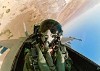
Una bella foto per apprezzare il Growler.


3103668973_b62ce4ebed_o.jpg


E un'altra.


3078918649_126dea9407_o.jpg

Modificato da Little_Bird

Purtroppo pare che la prevista versione da attacco elettronico del B52 sia stata nuovamente annullata. L'EA18 rimane pertanto l'unico velivolo EW di nuova generazione in programma (a parte il possibile uso di UAV).


http://worldwidewarpigs.blogspot.com/2009/...lled-again.html


The US Air Force's decision to terminate the EB-52 stand-off jammer concept for a second time deals a new blow to the US electronic warfare community.

This is a big deal. This was going to be one of the recipients of some of the next gen jammer technology. This means that the effort to keep costs down on the next gen jammer will be at risk.

Since the Growler can only be a limited escort jammer, this will cause other problems for the U.S. electronic warfare community and air power strategy in general. How would low and medium band search radars be jammed at distance so as to better support the F-22 and F-35? Will any C-130 solution be able to meet all the needs? Hard to say as this issue is more about trying to save a few pennies as opposed to a hard plan to give U.S. air power real protection.

The real mission? Smile and delay stand-off jamming to some other date that can be pushed even farther out at a later time with some thin excuse. In spite of the happy face USAF is putting on, with the lack of a credible stand-off jammer, the F-35 which does not have extreme altitude, significant super-cruise and proper all angle stealth will be at more risk. Even then it won't be a walk in the park for the F-22.

How much capability can the USAF throw in the trash and still be called the world's greatest air force?

Doppio ringraziamento, sia a little per le foto stupende sia a Gianvito per l'interessantissima notizia! ;)

  • 3 settimane dopo...

Growler EW Upgrades On The Way


The brand-new EA-18G Growler has additional advances for airborne electronic attack (AEA) already on the way.


High on the list is the Next Generation Jammer (NGJ), which is to add even longer-range electronic attack, spoofing and advanced information and network attack options. With the new digital telecommunications used by opponents, U.S. planners have to be much more detailed about how electronic attack is conducted against networked, computer-controlled threats such as integrated air defenses.


Part of the new threat involves commercially available communications. GSM, Satphone, Bluetooth, 80211G and 80216 technologies are all built into one handset. It switches the user through all the options to find a usable route when being jammed. That type of connection technology is available and cheap.


New special-purpose electronic attack involves attacking more than external emissions. It goes after the digital instructions, called protocols, that run a network. It's electronic warfare against a computer network and not just a radar or radio signal. The goal is controlling communications more than preventing them. Nontraditional electronic attack involves producing long-lasting instead of temporary effects on enemy electronics.


Navy officials are a bit more circumspect and focused on incremental, near-term improvements.


"A much better jammer than the ALQ-99 [jamming pods that now equip both the Growler and Prowler] is part of the Growler roadmap," says Commander Frank Morley, program manager for the EA-18G. There are areas that could profit significantly from improvements "including the number and size of antennas and the small number of bands that can be attacked."


There also are issues with in-flight flexibility. Once the aircraft takes off, there is a limited, fixed configuration for electronic attack. NGJ is expected to offer more flexibility once airborne, and more band coverage that also can be adjusted in flight. ICAP III has already added information on board, networking capability and information from off-board sources to the older Prowler. NGJ is expected to allow even greater in-flight reactive capability.


"An EA-6B Prowler [in contrast] doesn't have a radar so it can defend itself only by running away," Morley says. "With the Growler's AESA radar, the crew can see what's going on. They know if there are fighters that have leaked through the front wall of the strike package. Situational awareness and the ability to defend themselves in an offensive manner is a first step that will make a difference. Now you don't have to put it in the back of the strike package with a section of fighters. [The Growler] may be able to hang around longer, planners may not have to put up as many assets to protect it and it may be able to make some of its own tactical decisions."


www.aviationweek.com

Growler EW Upgrades On The Way

The brand-new EA-18G Growler has additional advances for airborne electronic attack (AEA) already on the way.


High on the list is the Next Generation Jammer (NGJ), which is to add even longer-range electronic attack, spoofing and advanced information and network attack options. With the new digital telecommunications used by opponents, U.S. planners have to be much more detailed about how electronic attack is conducted against networked, computer-controlled threats such as integrated air defenses.


Part of the new threat involves commercially available communications. GSM, Satphone, Bluetooth, 80211G and 80216 technologies are all built into one handset. It switches the user through all the options to find a usable route when being jammed. That type of connection technology is available and cheap.


New special-purpose electronic attack involves attacking more than external emissions. It goes after the digital instructions, called protocols, that run a network. It's electronic warfare against a computer network and not just a radar or radio signal. The goal is controlling communications more than preventing them. Nontraditional electronic attack involves producing long-lasting instead of temporary effects on enemy electronics.


Navy officials are a bit more circumspect and focused on incremental, near-term improvements.


"A much better jammer than the ALQ-99 [jamming pods that now equip both the Growler and Prowler] is part of the Growler roadmap," says Commander Frank Morley, program manager for the EA-18G. There are areas that could profit significantly from improvements "including the number and size of antennas and the small number of bands that can be attacked."


There also are issues with in-flight flexibility. Once the aircraft takes off, there is a limited, fixed configuration for electronic attack. NGJ is expected to offer more flexibility once airborne, and more band coverage that also can be adjusted in flight. ICAP III has already added information on board, networking capability and information from off-board sources to the older Prowler. NGJ is expected to allow even greater in-flight reactive capability.


"An EA-6B Prowler [in contrast] doesn't have a radar so it can defend itself only by running away," Morley says. "With the Growler's AESA radar, the crew can see what's going on. They know if there are fighters that have leaked through the front wall of the strike package. Situational awareness and the ability to defend themselves in an offensive manner is a first step that will make a difference. Now you don't have to put it in the back of the strike package with a section of fighters. [The Growler] may be able to hang around longer, planners may not have to put up as many assets to protect it and it may be able to make some of its own tactical decisions."


www.aviationweek.com

USA leads the way...

Notizia molto indicativa ed eloquente, che ben spiega per quale motivo gli Stati Uniti sono al vertice nelle tecnologie militari.

Un velivolo da guerra elettronica allo stato dell'arte come il Growler, che non è ancora stato introdotto nei reparti operativi è già oggetto di migliorie ed importanti upgrades.

Dopo questa Pap se potessi ti stringerei la mano.

Rispetto a costui!! che quotone :adorazione:

  • 1 anno dopo...

NEW NAVY JAMMERS COULD INVADE NETWORKS, NUKE SITES


Lost in all this noise was the U.S. Navy’s real plan for winning any future air war with China or another big baddie. Rather than going toe-to-toe with J-20s and other enemy jets, the Navy is planning to attack its rivals where they’re most vulnerable: in the electromagnetic spectrum.


Il Pentagono ha le idee chiare sul futuro di questo aereo, decidendo di tagliare l'acquisto di ulteriori F-22, ed incremetare il numero di piattaforme NGJ, il Growler appunto.


Onori al nuovo dominatore dell'aria.

E' plausibile.....

Se un velivolo stealth non lo vediamo, allora complichiamogli la vita rendendo difficoltoso l' utilizzo dei suoi sistemi di bordo......

aereo di 5a gen-stealth=aereo di 4.5 gen. se si riuscisse a vedere un aereo stealth (cosa che inizia a diventare possibile) t50 & co. sarebbero fregati dall'accoppiata ea18+f35. l'ideale sarebbe integrare questa tecnologia anche con i caccia.

Magari.......

Solo che già un velivolo del genere pesa molto, poi aggiungiamoci tutta la camponentistica elettronica, arriveremo ad avere un F 35 pesante come un bombardiere strategico.

Non dimentichiamo che l'F-35 ha già una suite avionica assolutamente pazzesca per un caccia, non credo che ci voglia molto in futuro per aggiungere strumentazione, si parla già di kit modulari analoghi ai POD che rendono il growler tale, insieme ai cablaggi maggiorati che sono già presenti nelle pacchetto base del lightining, da integrare.


Poi il Growler non pesa assolutamente molto, anzi non è molto differente da un normale super hornet con qualche pod attaccato sotto.

Magari.......

Solo che già un velivolo del genere pesa molto, poi aggiungiamoci tutta la camponentistica elettronica, arriveremo ad avere un F 35 pesante come un bombardiere strategico.

Non dimentichiamo che l'F-35 ha già una suite avionica assolutamente pazzesca per un caccia, non credo che ci voglia molto in futuro per aggiungere strumentazione, si parla già di kit modulari analoghi ai POD che rendono il growler tale, insieme ai cablaggi maggiorati che sono già presenti nelle pacchetto base del lightining, da integrare.

mi sono espresso male, io intendevo quello che ha detto dominius, cioè o fare un upgrade all'avionica dell'f35 in modo da vedere gli stealth o aggiungere ad esso un pod conformal tipo quello che era pensato per il cannone nelle versioni B e C per preservare la stealthness.

E cosa sarebbe "l'upgrade dell'avionica per vedere gli stealth" di grazia?

Io penso che velivoli da distrurbo elettronici ( o simili ) siano sempre necessari in un' azione operativa....

Lasciamo fare all' F 35 quello per cui è stato creato....

E cosa sarebbe "l'upgrade dell'avionica per vedere gli stealth" di grazia?

è quello che hai detto tu.

è quello che hai detto tu.

Dominus ha parlato di integrare sul LightningII i dispositivi del Growler, non ha mai detto che quest' ultimo può "vedere" gli stealth...

Vuoi dire la tua? Unisciti alla discussione

Account

Navigazione

Cerca

Cerca

Configura le notifiche push del browser

Chrome (Android)
  1. Tocca l’icona del lucchetto accanto alla barra degli indirizzi.
  2. Tocca Autorizzazioni → Notifiche.
  3. Scegli l’opzione che preferisci.
Chrome (desktop)
  1. Fai clic sull’icona del lucchetto nella barra degli indirizzi.
  2. Seleziona Impostazioni sito.
  3. Trova Notifiche e scegli l’opzione che preferisci.